Applied Learning Programme
Explore how Woodlands Ring Secondary School's Applied Learning Programme builds STEM skills through hands-on robotics, coding, and aviation activities themed around the future of transportation.
At Woodlands Ring Secondary School (WRSS), the Applied Learning Programme (ALP) aims to cultivate students’ interest in STEM (Science, Technology, Engineering, and Mathematics) with the theme of “Future of Transportation".
The objectives of our ALP are:
● to foster a sense of curiosity in students and encourage them to explore new ideas and concepts through experimentation, questioning, taking risks, and learning from mistakes,
● to develop in students the ability to apply what they learn in real-life situations and make connections between different subjects and disciplines,
● to promote collaboration among students and provide opportunities for them to work together to co-create knowledge and solve problems, and
● to develop a new generation of engineers with effective communication skills.
ALP Teaching and Learning Framework
Our ALP curriculum anchors on 4Cs - Connect, Construct, Contemplate, and Continue.
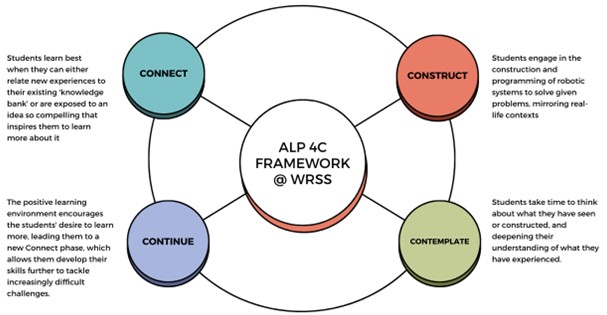
At the Connect phase, students are encouraged to relate new experiences to their existing knowledge or to explore ideas that spark their curiosity. The Construct phase emphasises on hands-on and minds-on activities that enable students to acquire and apply knowledge. During the Contemplate phase, students take time to reflect on what they have learned and deepen their understanding of the experience. Finally, the Continue phase builds on the students' desire to continue learning and exploring.
Programme and Key Activities
The programme comprises of two tiers which targets at different groups of students.
Tier 1 programme
The Tier 1 programme are designed for all secondary one and two students.
Secondary 1 - Exploring the Future of Transportation with Lego Spike Prime
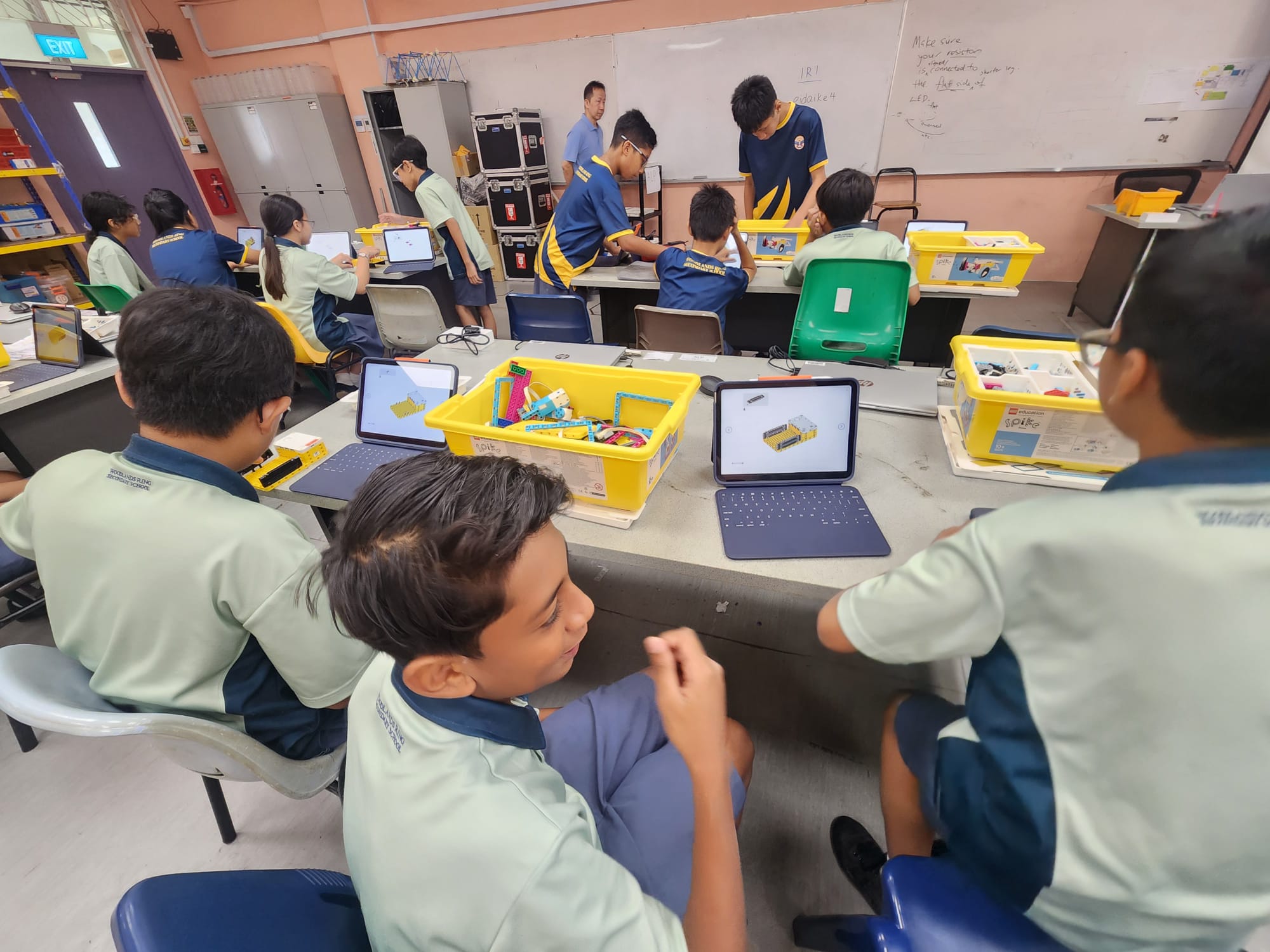
Secondary one students learn to use LEGO Spike Prime building components and hardware, as well as a drag-and-drop coding language based on Scratch. The emphasis of the programme is on transportation challenges and exploration tasks that necessitate the creation and programming of robots that are applicable to real-world scenarios. Students can also learn at their own pace from the resources designed by teachers in the SLS course with the help of their PDLP devices.
Secondary 2 - Fun with Arduino and Tinkercad Circuit
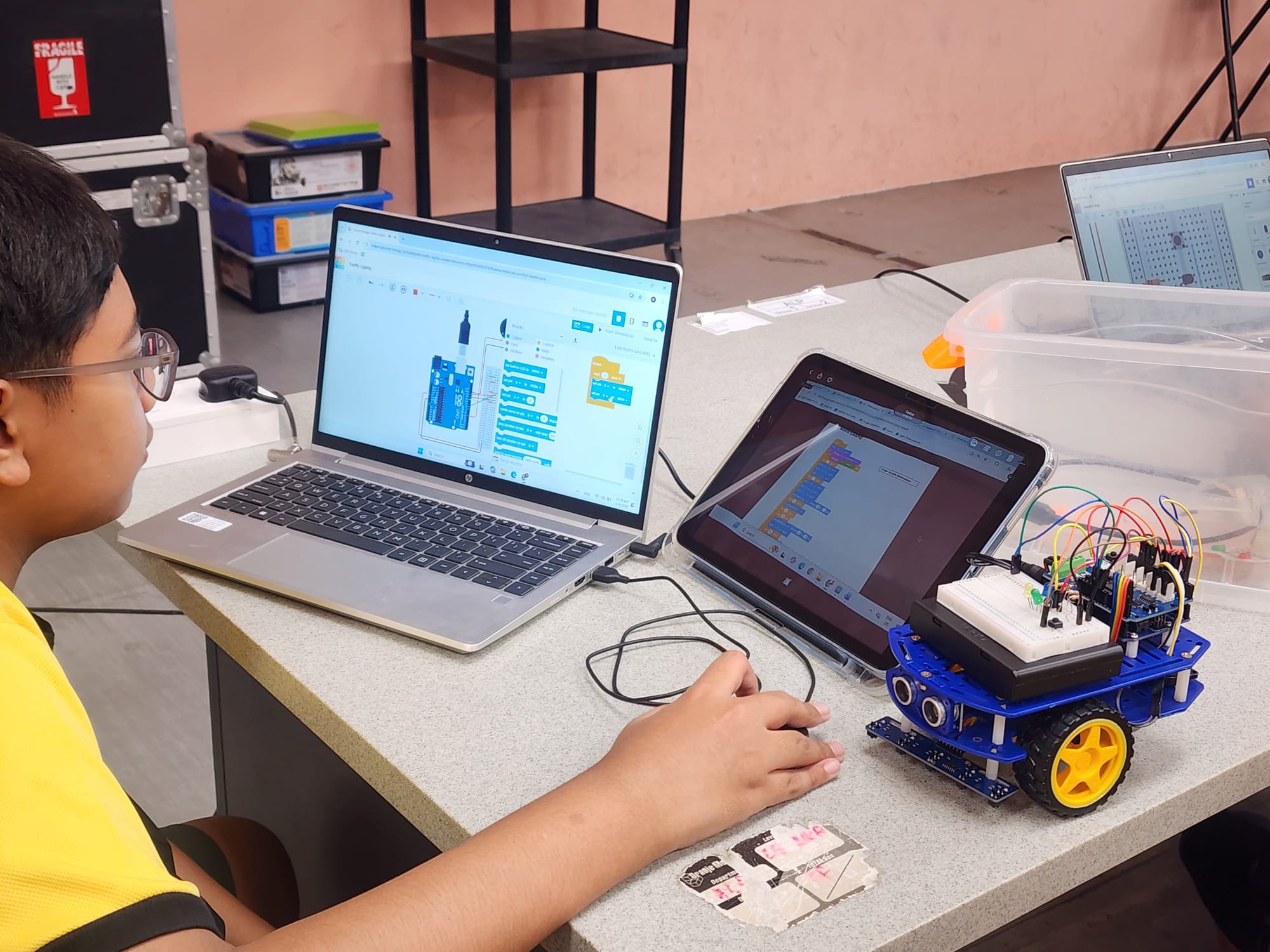
Secondary two students explore using Tinkercad Circuits simulation software before advancing to use a physical Arduino system to apply their problem-solving and critical thinking skills. They learn to control LEDs, buzzers, circuits that sense light and temperature, and code for an Arduino robot car. They also learn basic movements such as forward, backward, turn, and how to perform line tracing and distance sensing. The key intended outcome of the programme is to instill in students a curiosity to learn through experimentation, questioning, risk-taking and mistake-making.
Tier 2 programme
For Tier 2 programme, students are engaged in more advanced programme in Robotics Club and Singapore Youth Flying Club CCA. The programme involves more complex challenges that demand the application of critical and inventive skills, design thinking and inter-disciplinary knowledge to create advanced transportation models in order to solve real-world problems.
Robotics Club
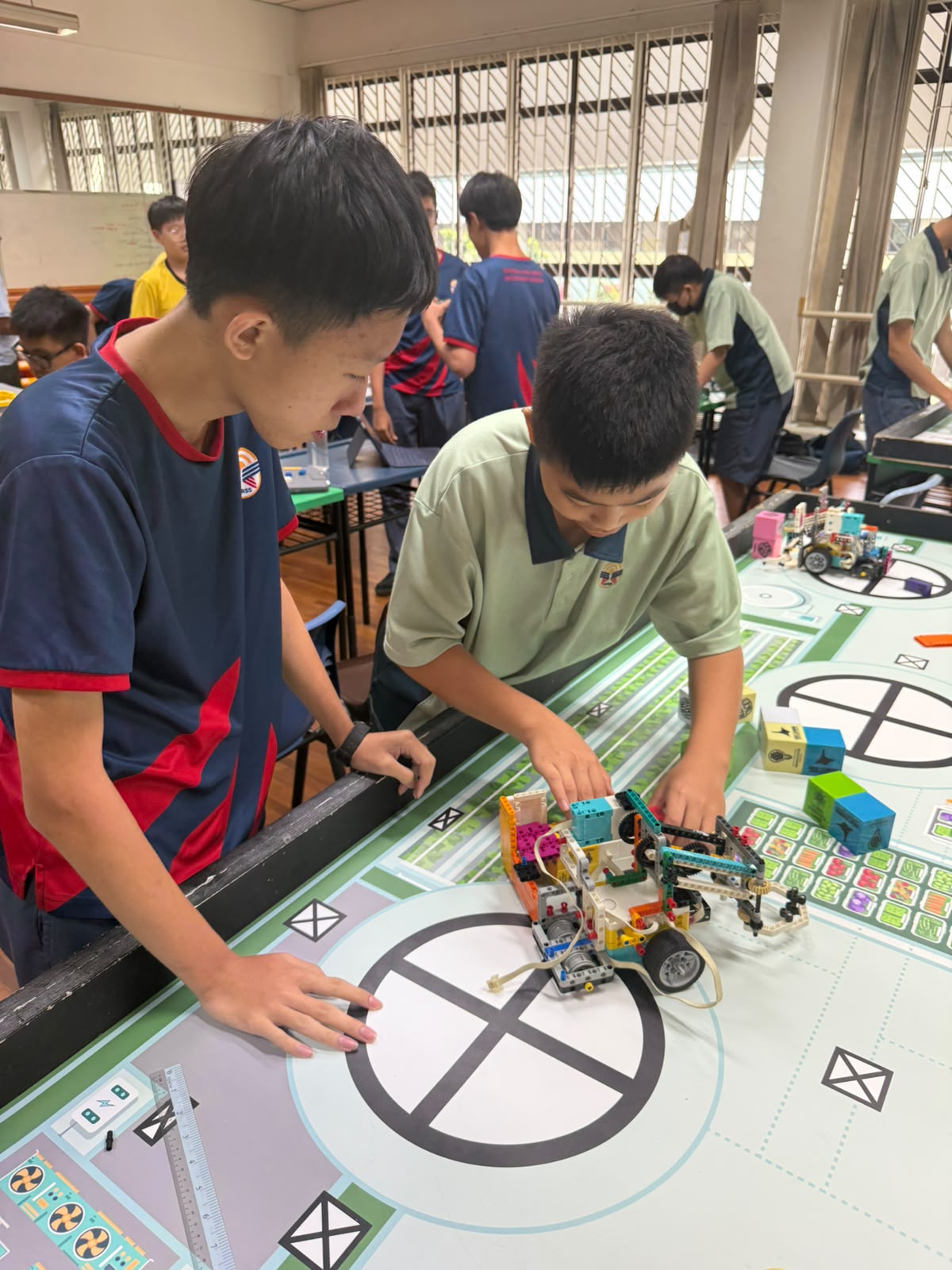
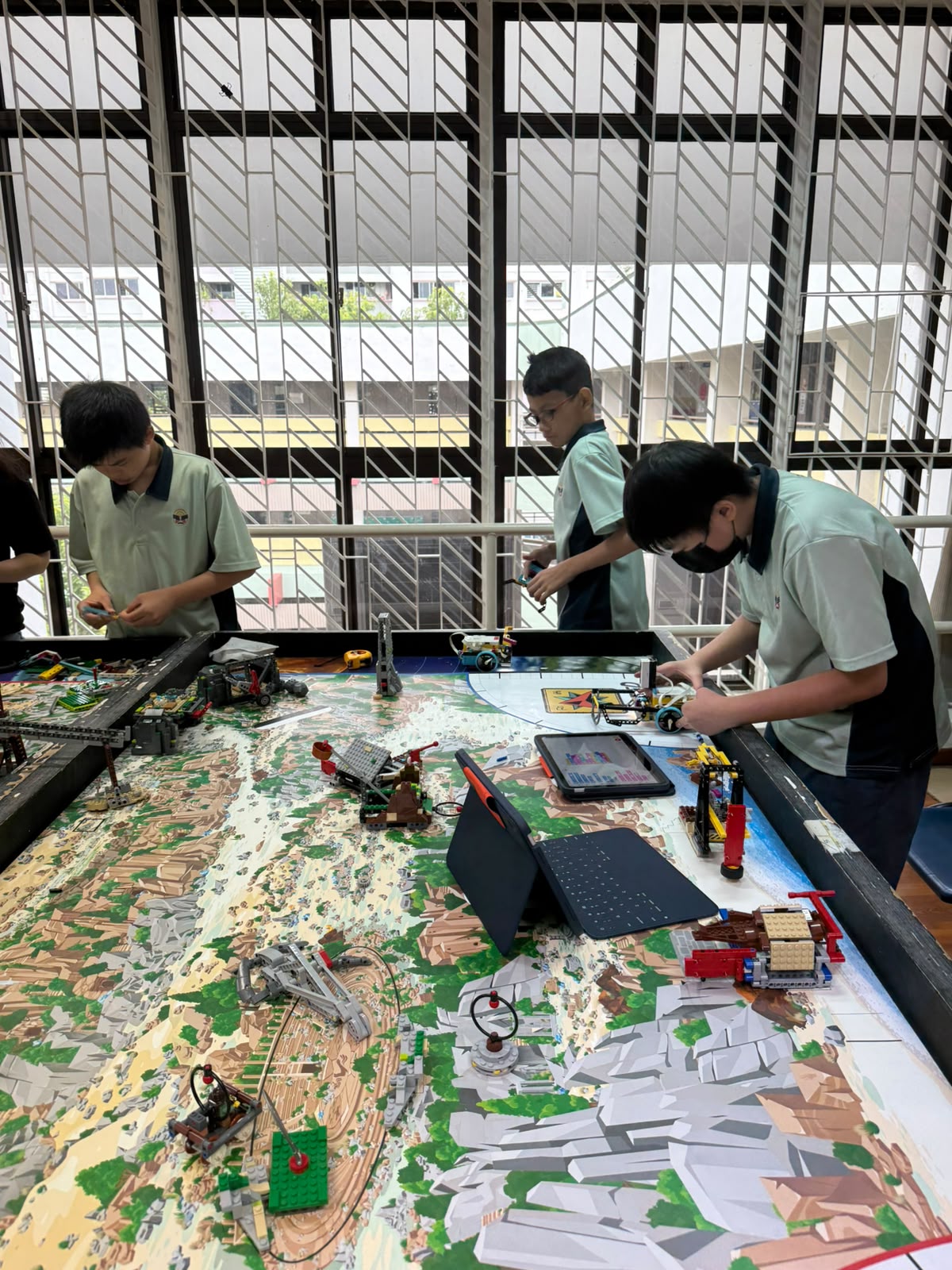
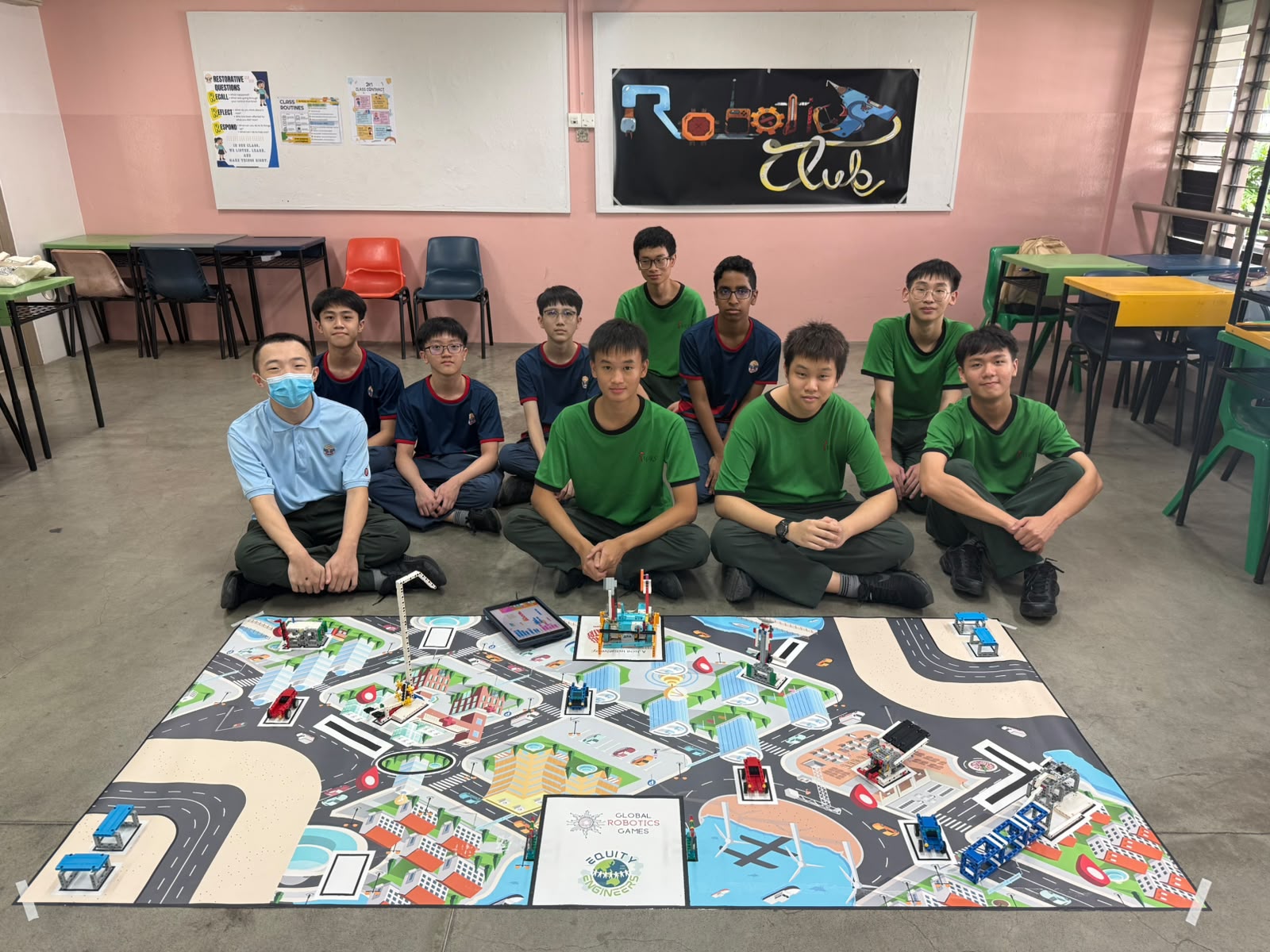
Robotics Club gives students the opportunity to put their ALP learning into practice. Building on the coding and building skills introduced through the ALP curriculum, members take on hands-on design and programming challenges that sharpen their technical and problem-solving abilities. These skills come together as students prepare for and compete in the FIRST Lego League (FLL) and the National Robotics Competition (NRC), representing the school while gaining valuable experience in engineering, teamwork, and innovation.
Singapore Youth Flying Club (SYFC)
The Singapore Youth Flying Club (SYFC) aims to develop aviation knowledge and passion for flying in youths, aligning with the school’s philosophy of maximising each student’s potential. Members experience hands-on glider building and flying, model aircraft control, coding, and drone flying, as well as using the PC Flight Simulator to learn basic piloting skills. SYFC members can participate in competitions and outreach programs, fostering exploration, innovation, and excellence.